
Date of Birth
1815
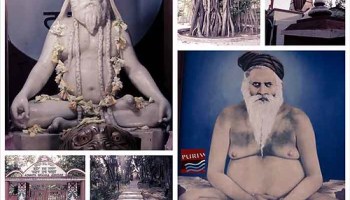
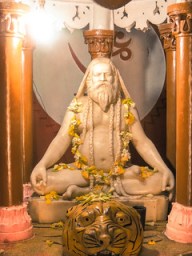
Totapuri arrived at the Dakshineswar temple garden toward the end of 1864. Perhaps born in Punjab, he was the head of a monastery in India's province and claimed leadership of seven hundred sannyasis. Trained from early youth in the Advaita Vedanta disciplines, he looked upon the world as an illusion. The gods and goddesses of the dualistic worship were to him mere fantasies of the deluded mind. Prayers, ceremonies, rites, and rituals had nothing to do with true religion, and about these, he was utterly indifferent. Exercising self-exertion and unshakable will-power, he had liberated himself from attachment to the sense-objects of the relative universe. For forty years, he had practiced austere discipline on the sacred Narmada bank and had finally realized his identity with the Absolute. Thenceforward he roamed in the world as an unfettered soul, a lion free from the cage. Clad in a loin-cloth, he spent his days under the canopy of the sky alike in storm and sunshine, feeding his body on the slender pittance of alms. He had been visiting the estuary of the Ganges. On his return journey along the sacred river bank, led by the mysterious Divine Will, he stopped at Dakshineswar.
Totapuri, discovering at once that Sri Ramakrishna was prepared to be a student of Vedanta, asked to initiate him into its mysteries. With the permission of the Divine Mother, Sri Ramakrishna agreed to the proposal. But Totapuri explained that only a sannyasi could receive the teaching of Vedanta. Sri Ramakrishna decided to renounce the world, but with the stipulation that the ceremony of his initiation into the monastic order be performed in secret, spare the feelings of his old mother. She had been living with him at Dakshineswar.
Source: ramakrishnavivekananda
1815
Punjab
Totapuri arrived at the Dakshineswar temple garden toward the end of 1864. Perhaps born in Punjab, he was the head of a monastery in India's province and claimed leadership of seven hundred sannyasis. Trained from early youth in the Advaita Vedanta disciplines, he looked upon the world as an illusion. The gods and goddesses of the dualistic worship were to him mere fantasies of the deluded mind. Prayers, ceremonies, rites, and rituals had nothing to do with true religion, and about these, he was utterly indifferent. Exercising self-exertion and unshakable will-power, he had liberated himself from attachment to the sense-objects of the relative universe. For forty years, he had practiced austere discipline on the sacred Narmada bank and had finally realized his identity with the Absolute. Thenceforward he roamed in the world as an unfettered soul, a lion free from the cage. Clad in a loin-cloth, he spent his days under the canopy of the sky alike in storm and sunshine, feeding his body on the slender pittance of alms. He had been visiting the estuary of the Ganges. On his return journey along the sacred river bank, led by the mysterious Divine Will, he stopped at Dakshineswar.
Totapuri, discovering at once that Sri Ramakrishna was prepared to be a student of Vedanta, asked to initiate him into its mysteries. With the permission of the Divine Mother, Sri Ramakrishna agreed to the proposal. But Totapuri explained that only a sannyasi could receive the teaching of Vedanta. Sri Ramakrishna decided to renounce the world, but with the stipulation that the ceremony of his initiation into the monastic order be performed in secret, spare the feelings of his old mother. She had been living with him at Dakshineswar.
Source: ramakrishnavivekananda
Sri Ramakrishna Parmhamsa
Hinglaj
India
In Koli-Yuga, one easy way to cross the world of suffering is to follow the path indicated by Vedanta.


Add a comment