
Date of Birth
15th August 1872
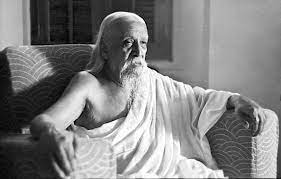
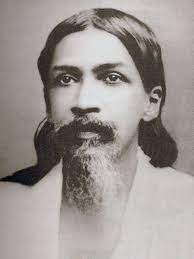
Sri Aurobindo (born Aurobindo Ghose; 15 August 1872 – 5 December 1950) was an Indian philosopher, yogi, guru, poet, and nationalist. He joined the Indian movement for independence from British rule for a while, was one of its influential leaders, and then became a spiritual reformer, introducing his visions on human progress and spiritual evolution.
Aurobindo studied for the Indian Civil Service at King's College, Cambridge, England. After returning to India, he took up various civil service works under the Maharaja of the Princely state of Baroda. He became increasingly involved in nationalist politics in the Indian National Congress and the nascent revolutionary movement in Bengal with the Anushilan Samiti. He was arrested in the aftermath of several bomb outrages linked to his organization in a public trial where he faced treason charges for the Alipore Conspiracy. However, Aurobindo could only be convicted and imprisoned for writing articles against British rule in India. He was released when no evidence could be provided, following the murder of a prosecution witness, Narendranath Goswami, during the trial. During his stay in the jail, he had mystical and spiritual experiences, after which he moved to Pondicherry, leaving politics for spiritual work.
Source: https://en.wikipedia.org/wiki/Sri_Aurobindo#Main_Works
15th August 1872
Kolkata
Sri Aurobindo Society
Sri Aurobindo (born Aurobindo Ghose; 15 August 1872 – 5 December 1950) was an Indian philosopher, yogi, guru, poet, and nationalist. He joined the Indian movement for independence from British rule for a while, was one of its influential leaders, and then became a spiritual reformer, introducing his visions on human progress and spiritual evolution.
Aurobindo studied for the Indian Civil Service at King's College, Cambridge, England. After returning to India, he took up various civil service works under the Maharaja of the Princely state of Baroda. He became increasingly involved in nationalist politics in the Indian National Congress and the nascent revolutionary movement in Bengal with the Anushilan Samiti. He was arrested in the aftermath of several bomb outrages linked to his organization in a public trial where he faced treason charges for the Alipore Conspiracy. However, Aurobindo could only be convicted and imprisoned for writing articles against British rule in India. He was released when no evidence could be provided, following the murder of a prosecution witness, Narendranath Goswami, during the trial. During his stay in the jail, he had mystical and spiritual experiences, after which he moved to Pondicherry, leaving politics for spiritual work.
Source: https://en.wikipedia.org/wiki/Sri_Aurobindo#Main_Works
Sri Aurobindo Ashram
The Life Divine, Essays on the Gita, The Human Cycle, Savitri: A Legend and a Symbol
91-413-2336396
Puducherry
605001
India
https://aurosociety.org/
India of the ages is not dead nor has she spoken her last creative word; she lives and has still something to do for herself and the human peoples.


Add a comment