
Place of Birth
Kochi
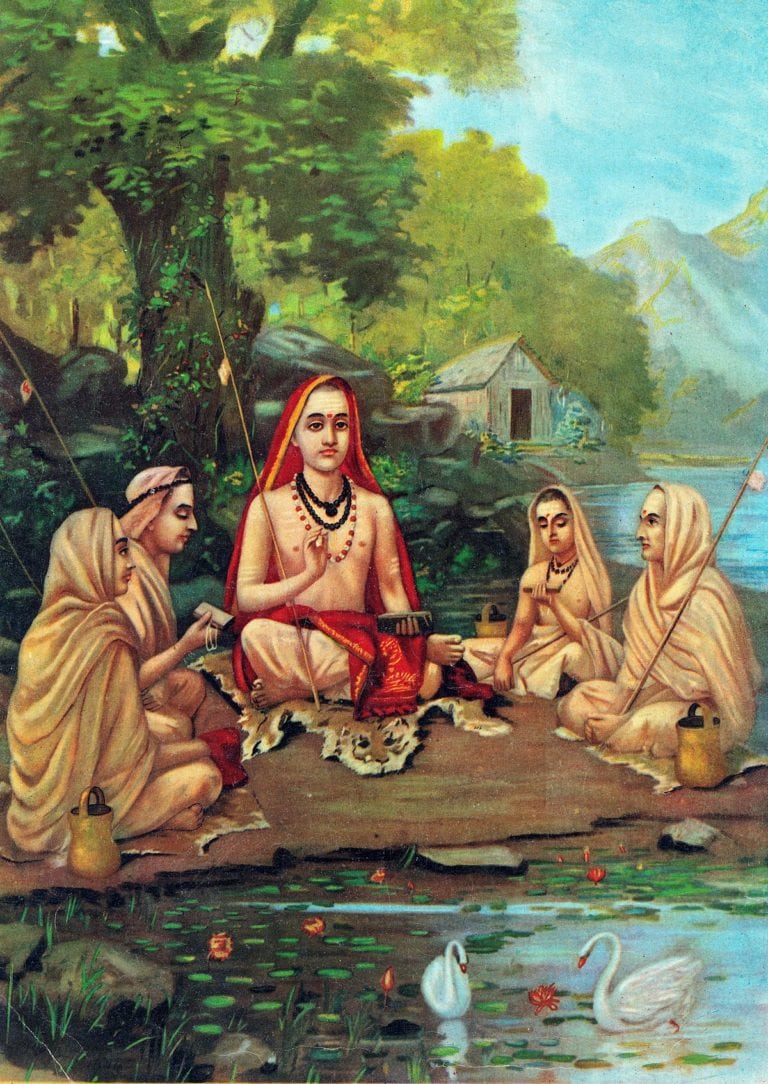
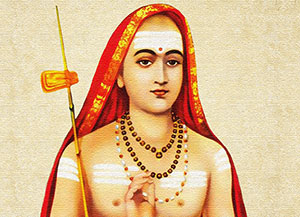
Adi Shankaracharya was an Indian philosopher and theologian who consolidated the doctrine of Advaita Vedanta note He is credited with unifying and establishing the main currents of thought in Hinduism.
His works in Sanskrit discuss the unity of the Ātman and Nirguna Brahman "brahman without attributes." He wrote copious commentaries on the Vedic canon (Brahma Sutras, Principal Upanishads, and Bhagavad Gita) to support his thesis.[10] His works elaborate on ideas found in the Upanishads. Shankara's publications criticized the ritually-oriented Mīmāṃsā school of Hinduism.[11] He also explained the key difference between Hinduism and Buddhism, stating that Hinduism asserts "Ātman (Soul, Self) exists," while Buddhism asserts that there is "no Soul, no Self."
Shankara traveled across the Indian subcontinent to propagate his philosophy through discourses and debates with other thinkers. He established the importance of monastic life as sanctioned in the Upanishads and Brahma Sutra, in a time when the Mīmāṃsā school found strict ritualism and ridiculed monasticism. He is reputed to have founded four mathas ("monasteries"), which helped in the historical development, revival, and spread of Advaita Vedanta, of which he is known as the greatest revivalist. Adi Shankara is believed to be the organizer of the Dashanami monastic order and unified the Shanmata tradition of worship.
Source: https://en.wikipedia.org/wiki/Adi_Shankara
Kochi
Adi Shankaracharya was an Indian philosopher and theologian who consolidated the doctrine of Advaita Vedanta note He is credited with unifying and establishing the main currents of thought in Hinduism.
His works in Sanskrit discuss the unity of the Ātman and Nirguna Brahman "brahman without attributes." He wrote copious commentaries on the Vedic canon (Brahma Sutras, Principal Upanishads, and Bhagavad Gita) to support his thesis.[10] His works elaborate on ideas found in the Upanishads. Shankara's publications criticized the ritually-oriented Mīmāṃsā school of Hinduism.[11] He also explained the key difference between Hinduism and Buddhism, stating that Hinduism asserts "Ātman (Soul, Self) exists," while Buddhism asserts that there is "no Soul, no Self."
Shankara traveled across the Indian subcontinent to propagate his philosophy through discourses and debates with other thinkers. He established the importance of monastic life as sanctioned in the Upanishads and Brahma Sutra, in a time when the Mīmāṃsā school found strict ritualism and ridiculed monasticism. He is reputed to have founded four mathas ("monasteries"), which helped in the historical development, revival, and spread of Advaita Vedanta, of which he is known as the greatest revivalist. Adi Shankara is believed to be the organizer of the Dashanami monastic order and unified the Shanmata tradition of worship.
Source: https://en.wikipedia.org/wiki/Adi_Shankara
Padmapada, Hasta Malaka, Trotakacharya, Trotaka Ashtakam
Kochi
India
Like the appearance of silver in mother of pearl, the world seems real until the Self, the underlying reality, is realized.


Add a comment