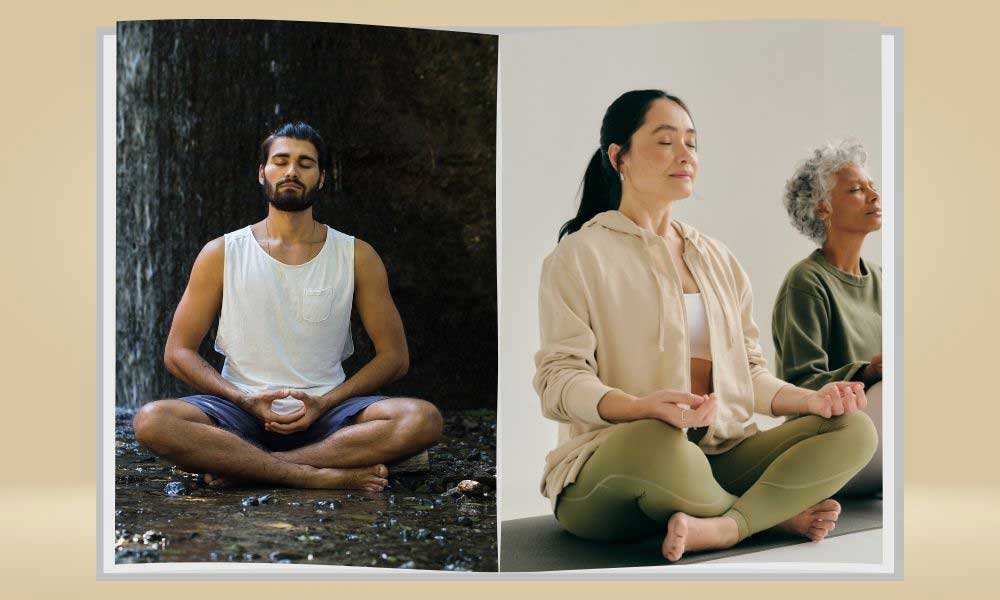
Yoga Practice Name
Samadhi (समाधि)
Samadhi (समाधि)
Absorption” or “Blissful Union” or “Enlightenment.
| Name and Sanskrit Spelling | The Sanskrit name is समाधि, transliterated as "Samādhi," and pronounced "suh-maa-dhee." |
| Literal Meaning | Samādhi is derived from “sam” (together or completely), “ā” (towards), and “dhi” (to place). It means to fully place or integrate the mind—complete absorption or union with the object of meditation. |
| Definition in Yoga | Samādhi is the eighth and final limb of Patanjali’s Ashtanga Yoga. It is the culmination of meditative absorption where the meditator, the object of meditation, and the process of meditation dissolve into one unified field of consciousness. It is the state of superconscious awareness and spiritual liberation. |
| Scriptural Reference | Yoga Sutra 3.3: Tadeva arthamātranirbhāsaṁ svarūpaśūnyam iva samādhiḥ – “When the object of meditation alone shines forth, and the mind is devoid of its own identity, this is Samādhi.” |
| Philosophical Significance | Samādhi represents the transcendence of the ego and the duality of subject-object. It is considered the gateway to liberation (moksha). It is the merging of individual consciousness with universal consciousness, where the practitioner realizes the true Self (Purusha). Patanjali describes various types of Samādhi: savikalpa (with form) and nirvikalpa (without form), or sabīja (with seed) and nirbīja (seedless). |
| Symbolism | Often symbolized by a fully bloomed lotus, empty sky, or radiant light—representing expanded awareness and transcendence. |
| Psychological/Emotional Themes | Bliss, clarity, freedom from suffering, transcendence, unity, liberation from identity and mind fluctuations. A deep peace beyond the grasp of words. |
| Signs of Development | Detachment from egoic patterns, a sense of wholeness, moments of deep stillness or bliss, non-reactivity, and equanimity. True Samādhi may be rare and fleeting but leaves a lasting imprint of expanded awareness and peace. |
| Common Misunderstandings | Samādhi is not escapism or disconnection. It is not hallucination or unconsciousness. It is full awareness beyond duality. It is also not a final end—but a state that can deepen with practice and ethical living. |
| Practices to Cultivate It | - Deepening stages of meditation (Dhyāna)- Ethical foundation (Yama & Niyama)- Seva (selfless service)- Letting go of identification with the ego- Inner surrender and non-attachment (vairāgya)- Grace through devotion (bhakti) or self-inquiry (jñāna) |
| Reflective Prompts / Inner Inquiry | - “What part of my identity am I ready to surrender?”- “Can I witness without needing to control or label?”- “What would it feel like to rest as awareness itself?” |
| Real-Life Examples or Modern Context | Though deep Samādhi is rare, glimpses arise in peak flow states, profound prayer, or silence beyond thought. Its influence appears in the way one lives—with compassion, clarity, and freedom from compulsion. It is not escape from the world, but living in the world as presence, unshaken by its fluctuations. |