
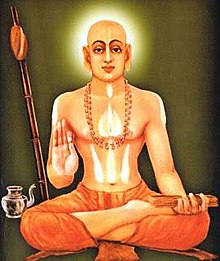
Date of Birth
1238
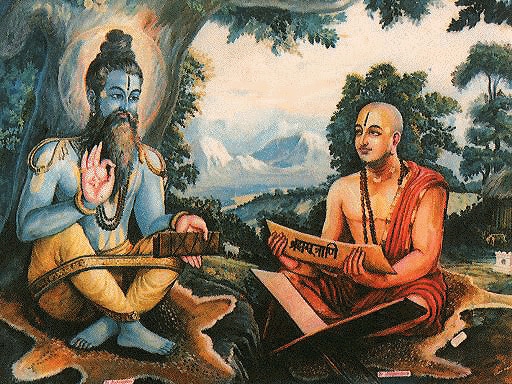
Madhvacharya (CE 1238–1317), sometimes anglicized as Madhva Acharya, and also known as Pūrna Prajña and Ānanda Tīrtha, was an Indian philosopher, theologian, and the chief proponent of the Dvaita (dualism) school of Vedanta. Madhva called his philosophy Tattvavāda meaning "arguments from a realist viewpoint."
Madhvacharya was born on the west coast of Karnataka state in 13th-century India. As a teenager, he became a Sanyasi (monk) joining Brahma-sampradaya guru Achyutapreksha, of the Ekadandi order. Madhva studied Hindu philosophy's classics, particularly the Principal Upanishads, the Bhagavad Gita, and the Brahma Sutras (Prasthanatrayi).[1] He commented on these and is credited with thirty-seven works in Sanskrit.[8] His writing style was of extreme brevity and condensed expression. His most significant work is the Anuvyakhyana, a philosophical supplement to his bhasya on the Brahma Sutras composed with a poetic structure. In some of his works, he proclaimed himself to be an avatar of Vayu, the god Vishnu's son.
Source: Wikipedia
1238
Udupi, Tulunad, Karnataka
Udupi Sri Krishna Matha
Madhvacharya (CE 1238–1317), sometimes anglicized as Madhva Acharya, and also known as Pūrna Prajña and Ānanda Tīrtha, was an Indian philosopher, theologian, and the chief proponent of the Dvaita (dualism) school of Vedanta. Madhva called his philosophy Tattvavāda meaning "arguments from a realist viewpoint."
Madhvacharya was born on the west coast of Karnataka state in 13th-century India. As a teenager, he became a Sanyasi (monk) joining Brahma-sampradaya guru Achyutapreksha, of the Ekadandi order. Madhva studied Hindu philosophy's classics, particularly the Principal Upanishads, the Bhagavad Gita, and the Brahma Sutras (Prasthanatrayi).[1] He commented on these and is credited with thirty-seven works in Sanskrit.[8] His writing style was of extreme brevity and condensed expression. His most significant work is the Anuvyakhyana, a philosophical supplement to his bhasya on the Brahma Sutras composed with a poetic structure. In some of his works, he proclaimed himself to be an avatar of Vayu, the god Vishnu's son.
Source: Wikipedia
91 820 252 0598
Udupi
India
God Vishnu has complete power over souls and matter and that Vishnu saves souls entirely by his grace which is granted to those who live pure and moral lives. Evil souls are predestined to eternal damnation and should of mediocre quality will transmigrate eternally.


Add a comment